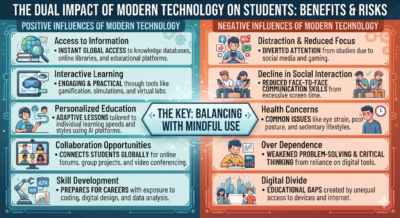

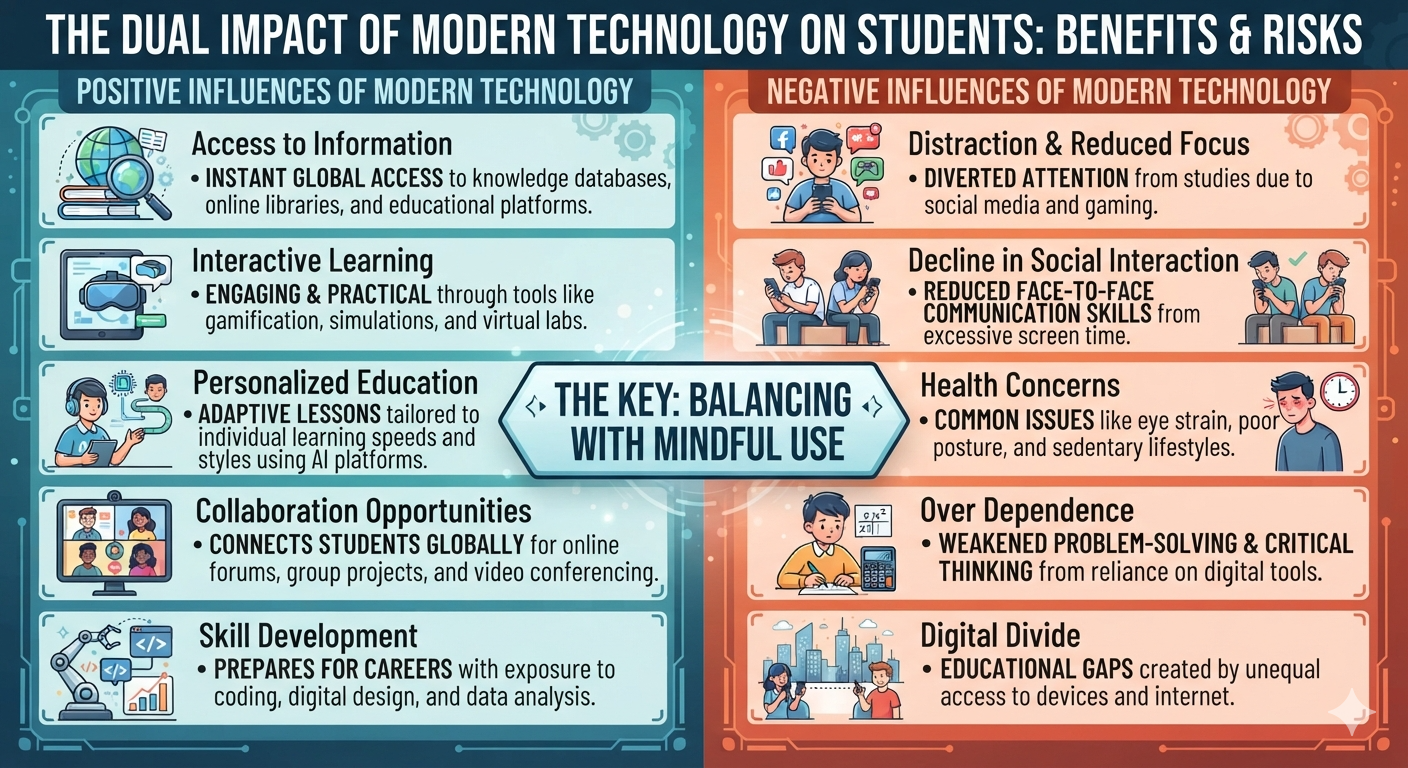
Modern technology has a profound influence on students: it enhances access to knowledge and personalized learning, but also introduces risks like distraction, reduced social interaction, and over dependence on digital tools. The key is balancing its benefits with mindful use.
Positive Influences of Modern Technology on Students
- Access to information Students can instantly reach global knowledge databases, online libraries, and educational platforms.
- Interactive learning Tools like gamification, simulations, and virtual labs make learning engaging and practical.
- Personalized education AI-driven platforms adapt lessons to individual learning speeds and styles.
- Collaboration opportunities Online forums, group projects, and video conferencing connect students across the world.
- Skill development Exposure to coding, digital design, and data analysis prepares students for future careers.
Although McClintock says he remembers coming across the lorem ipsum passage in a book of old metal type samples. So far he hasn’t relocated where he once saw the passage, but the popularity of Cicero in the 15th century supports the theory that the filler text has been used for centuries. And anyways, as Cecil Adams reasoned, “[Do you really] think graphic arts supply houses were hiring classics scholars in the 1960s?” Perhaps. But it seems reasonable to imagine that there was a version in use far before the age of Letraset.
Negative Influences of Modern Technology on Students
- Distraction and reduced focus Social media and gaming can divert attention from studies.
- Decline in social interaction Excessive screen time may reduce face-to-face communication skills.
- Health concerns Eye strain, poor posture, and sedentary lifestyles are common issues.
- Over dependence Reliance on digital tools can weaken problem-solving and critical thinking.
- Digital divide Unequal access to devices and internet widens educational gaps.